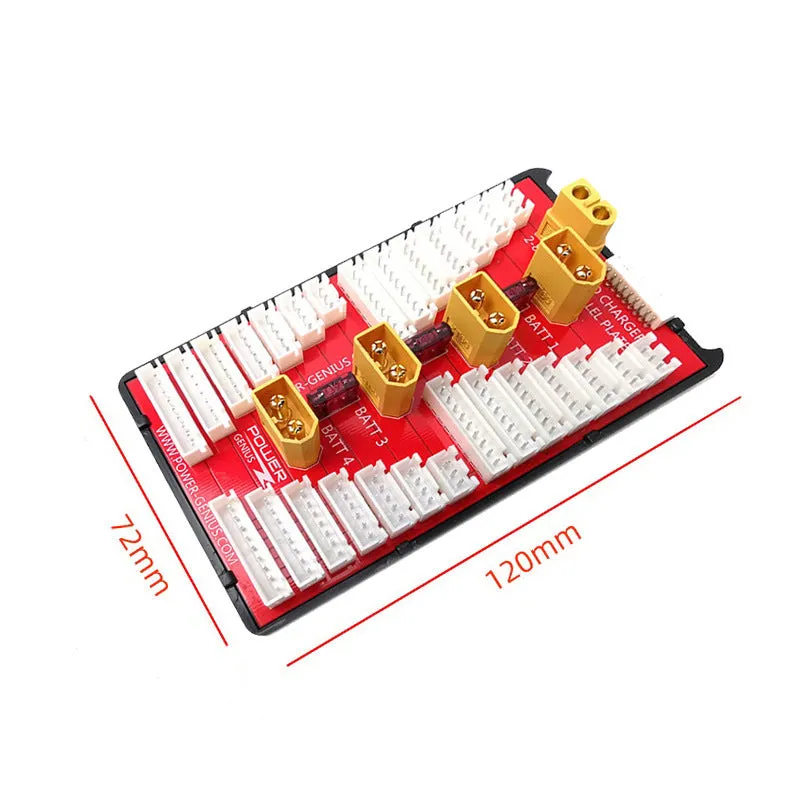
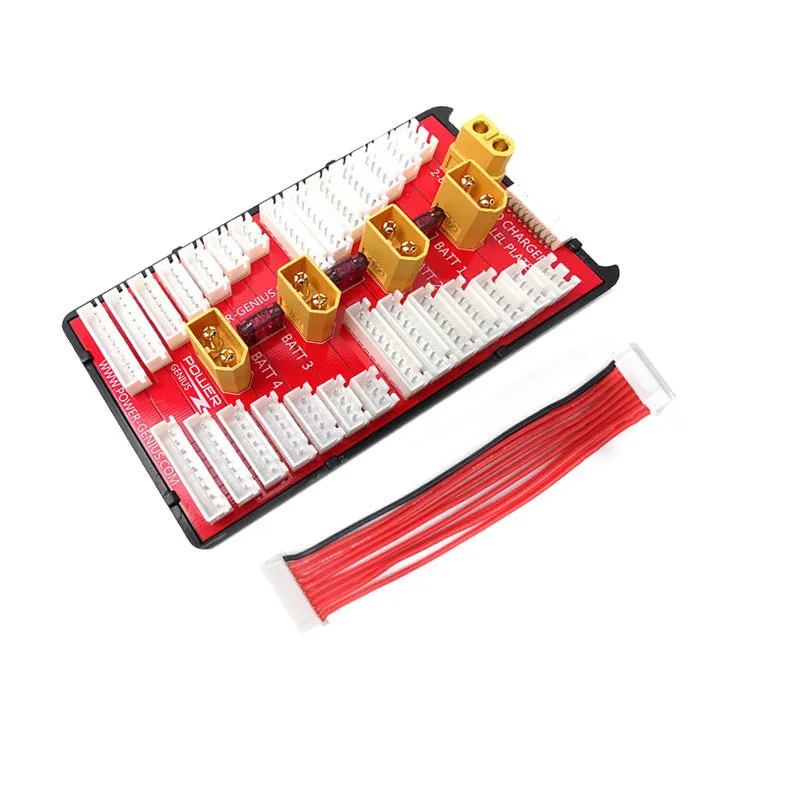
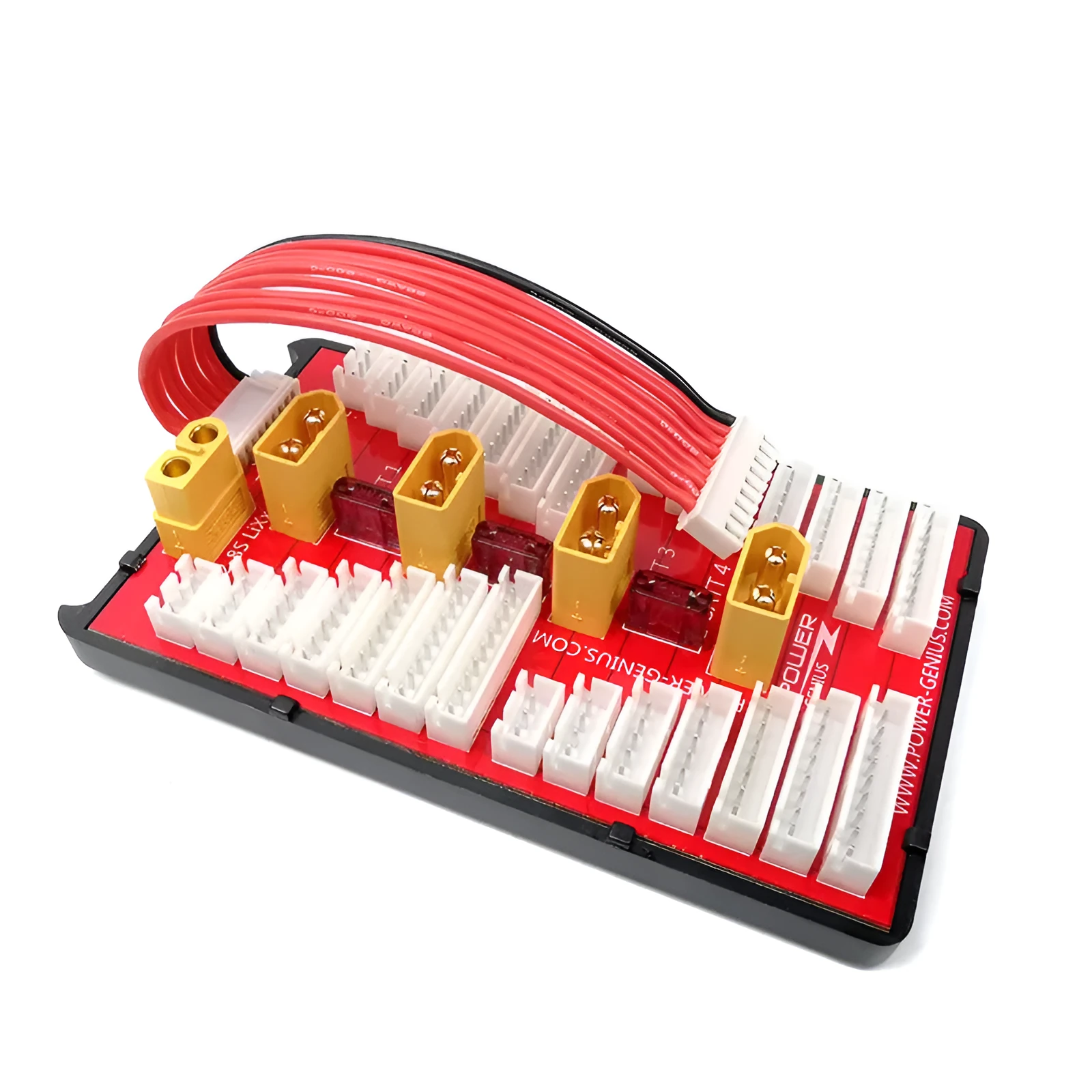
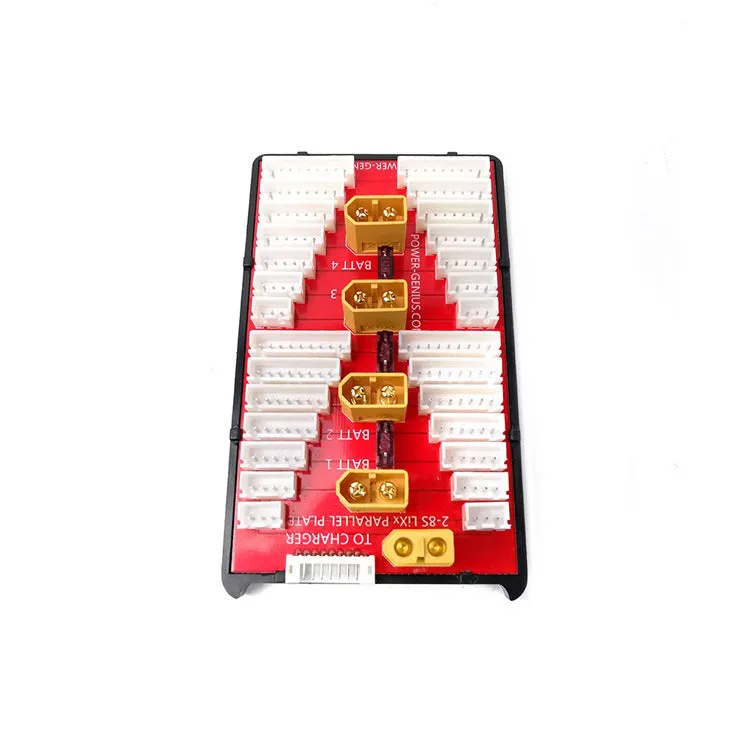
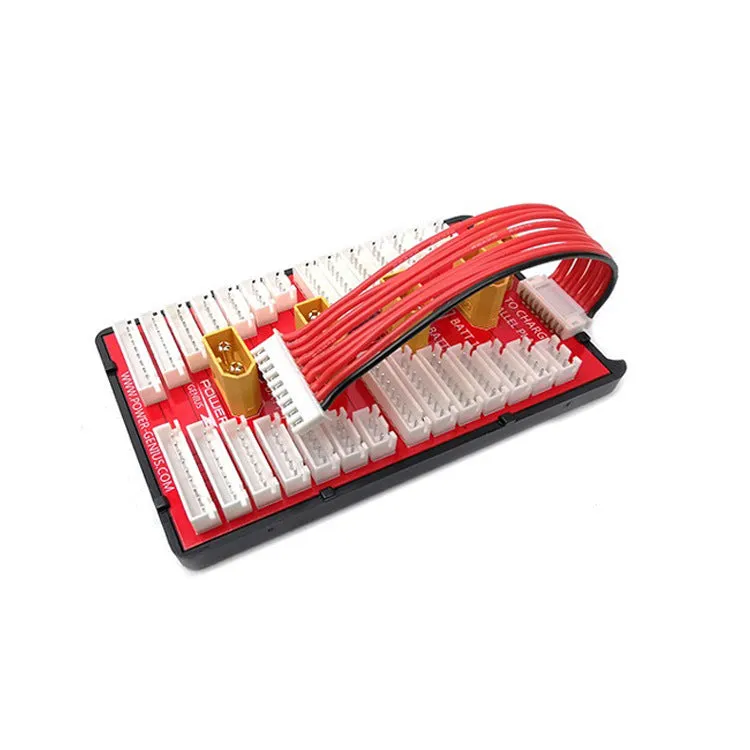
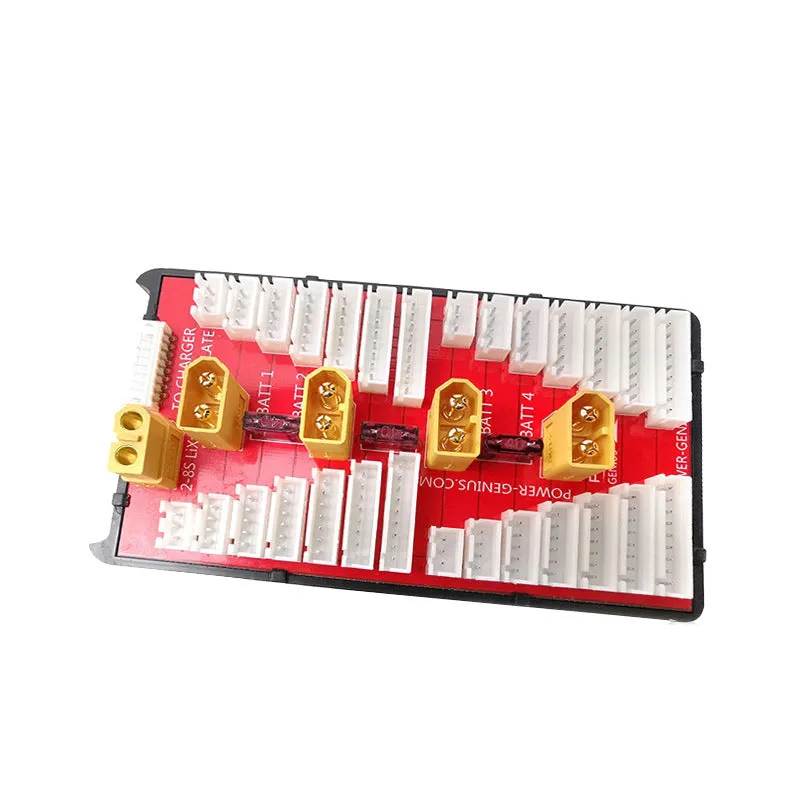
This V2 Parallel Charge Board is designed for users of radio-controlled models, drones, or other devices powered by lithium polymer (LiPo) batteries. It allows you to connect and balance charge up to four separate battery packs at the same time, provided they share an identical cell count, such as all being 4S or 6S configurations. By doing so, it streamlines the charging process, turning what would be four individual charging sessions into one consolidated operation. This is particularly useful during maintenance or preparation sessions where multiple batteries need to be topped up efficiently.
Key Features and Build Quality
This section details the specific components and safety measures integrated into the parallel charging board's design. We'll look at the materials chosen for conductivity and durability, the electrical safeguards in place, and the practical accessories included to ensure safe operation.
High-Current PCB Design
At the heart of the board is a printed circuit board (PCB) fabricated with a thicker layer of copper foil. This specific construction is not merely for robustness; it is engineered to reliably handle a continuous charging current of up to 35 amps. This capability means the board can support the combined current draw when charging multiple high-capacity battery packs in parallel without risk of overheating or voltage drop across the board itself.
Fuse Protection System
A primary safety feature is the inclusion of a 40-ampere fuse installed between any two groups of battery connection points. This fuse acts as a critical fail-safe. If the voltage difference between two connected battery packs is excessively large upon connection, it could cause a dangerous surge of current. The 40A fuse is designed to blow under such conditions, breaking the circuit and preventing damage to the batteries, the charger, or the board itself from burning out.
Connector and Wiring Quality
Electrical reliability is ensured through the use of high-quality gold-plated connectors at each terminal. Gold plating offers superior corrosion resistance and maintains a stable, low-resistance connection over time. The wires leading from the balance ports are specified as 18AWG multi-strand silicone wire. The 18AWG gauge is sufficient for balance currents, while the silicone insulation is flexible, heat-resistant, and durable, preventing cracks from repeated bending during setup and storage.
Practical Applications and Use
Understanding how to use this board correctly maximises its benefits and ensures safety. The following scenarios outline its application in both organised hobbyist settings and more general usage contexts, highlighting the operational advantages it provides.
For Drone Racing and RC Hobbyists
In competitive drone racing or a day at the RC track, pilots often use multiple identical battery packs. Using this board, a pilot can connect four depleted 4S 1500mAh packs in parallel. The board treats them as a single 4S 6000mAh battery for the charger. This allows the use of a higher charge current (within the 1C rate of the combined capacity) than might be safe for a single small pack, significantly reducing the total time needed to prepare all batteries for the next flight session compared to charging them individually.
Efficient Workshop and Field Charging
For general hobbyists or technicians managing fleets of models, the board simplifies logistics. Instead of monitoring and swapping batteries on a charger every hour, you can set up four packs and walk away until the single charging cycle is complete. The tactile process of connecting the firm, gold-plated plugs and the soft, pliable silicone wire provides a confident, secure feel, reducing worry about loose connections during the extended charge cycle.
Versatility in Battery Management
The board's function is specifically for parallel charging, which keeps the battery cell count (S number) constant while adding the capacities together. For instance, connecting two 4S 5000mAh batteries in parallel creates a virtual 4S 10000mAh battery for the charger. This versatility means it can be used with various chargers, as long as the charger can supply the required current for the total parallel capacity. It is ideal for consolidating charging stations and reducing clutter.
User Benefits and Value
The advantages of using this parallel board extend beyond simple time savings. Here we examine the long-term value proposition, the satisfaction derived from a streamlined workflow, and the specific reasons it represents a sensible addition to your equipment.
Long-Term Time and Efficiency Value
Consider the cumulative time spent over a year of hobbying. If you regularly charge four packs and each individual balance charge takes 60 minutes, that's four hours of active charger time. Using this board could reduce that to a single, potentially faster, 90-minute cycle for all four, effectively saving 2.5 hours per session. This time saving translates directly into more flying or running time and less time spent on maintenance, offering clear efficiency gains from the initial investment.
Confidence Through Protected Operation
A Direct Route to Faster Turnaround
The core reason to choose this board is the measurable reduction in charging downtime. By enabling simultaneous balance charging of multiple packs, it directly addresses the bottleneck of waiting for individual charges to complete. For anyone who uses more than one or two lithium battery packs regularly, this adapter provides a straightforward, spec-backed method to get your equipment ready to use again in less time, maximising your active enjoyment of the hobby.