Stay Inspired
Subscribe for exclusive tips and storage ideas to elevate your kitchen.


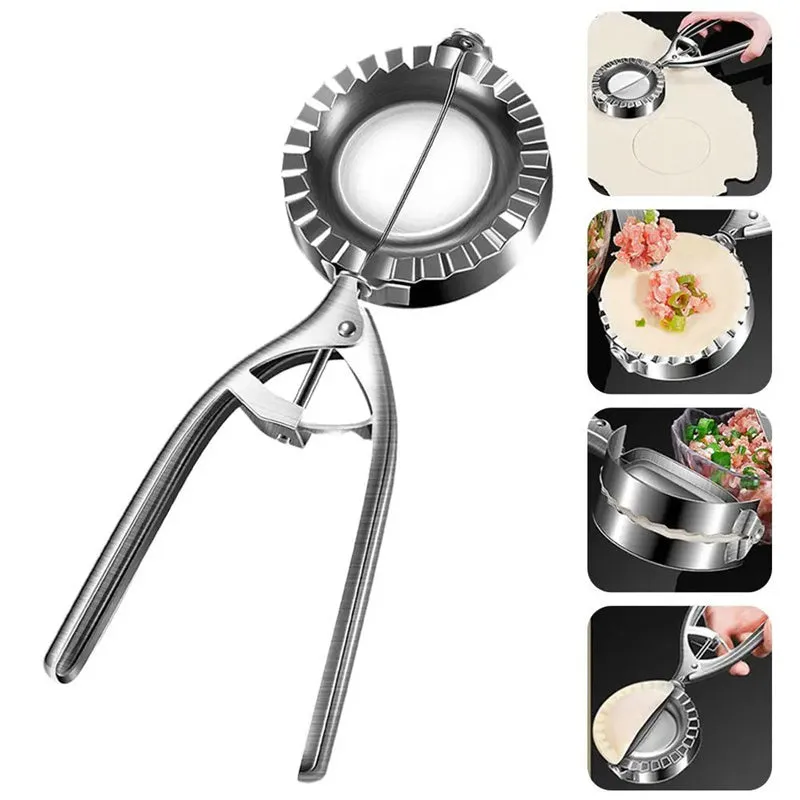
This manual kitchen tool provides a practical method for forming dumplings and other filled pastries at home. Designed as a press-action mould, it aims to help create uniform parcels with effective seals, which can be a consideration for preventing filling leakage during cooking. The tool is constructed from 304 stainless steel, a material noted for its practical resistance to rust and corrosion in kitchen environments. It includes a handle for grip and operates via a simple process. While it is primarily described for making dumplings, the source text also mentions its use for empanadas and pierogies, suggesting versatility for different types of filled pastry.
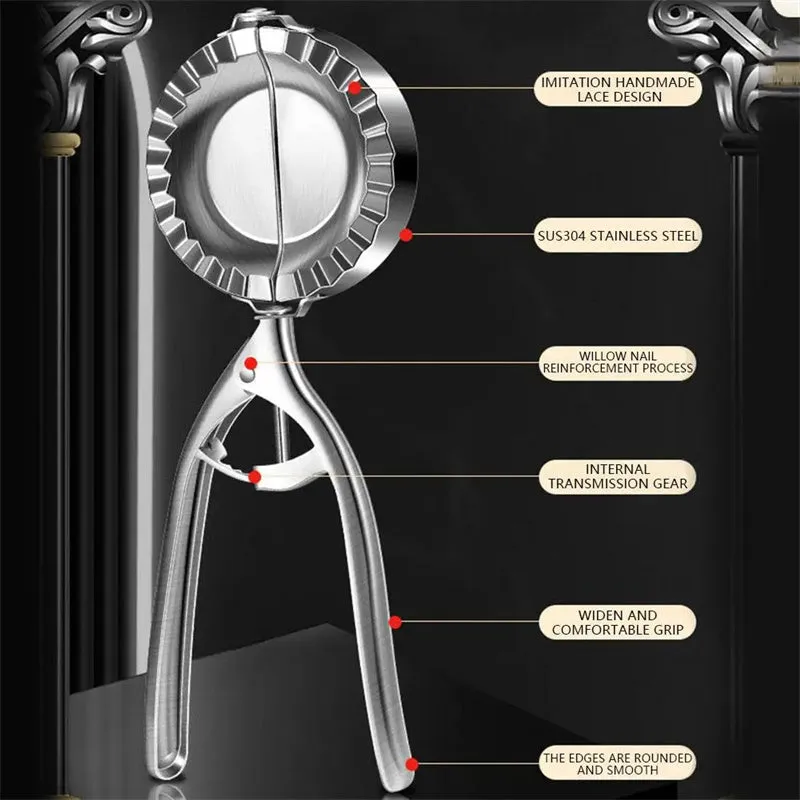
The dumpling mould is built around a simple, manual mechanism designed for home kitchen use.
The main body of the mould is made from 304 stainless steel. This material is recognised for its practical properties in a kitchen context, including resistance to rust and corrosion, which can be relevant for a tool that may be used with moist ingredients and requires regular washing. The mould is finished in a solid silver colour, as stated in the source text.
While exact dimensions are not provided, the source describes the design as 'compact'. This suggests it is sized for manageable storage in a kitchen drawer or cupboard and is intended for manual operation by hand, facilitated by the included handle.

The tool is presented as a versatile item for creating various filled foods in a domestic setting.
For occasions where larger quantities of uniform dumplings or pastries are desired, such as family gatherings or meal preparation, this manual tool can help standardise the shaping process. Its straightforward operation may reduce the skill threshold compared to freehand folding.
In a standard home kitchen, the mould offers a practical method for making dumplings, potstickers, empanadas, or pierogies. The four-step process outlined in the source—cutting the wrapper, laying it flat, adding filling, and pressing closed—aims to simplify what can otherwise be a fiddly task.
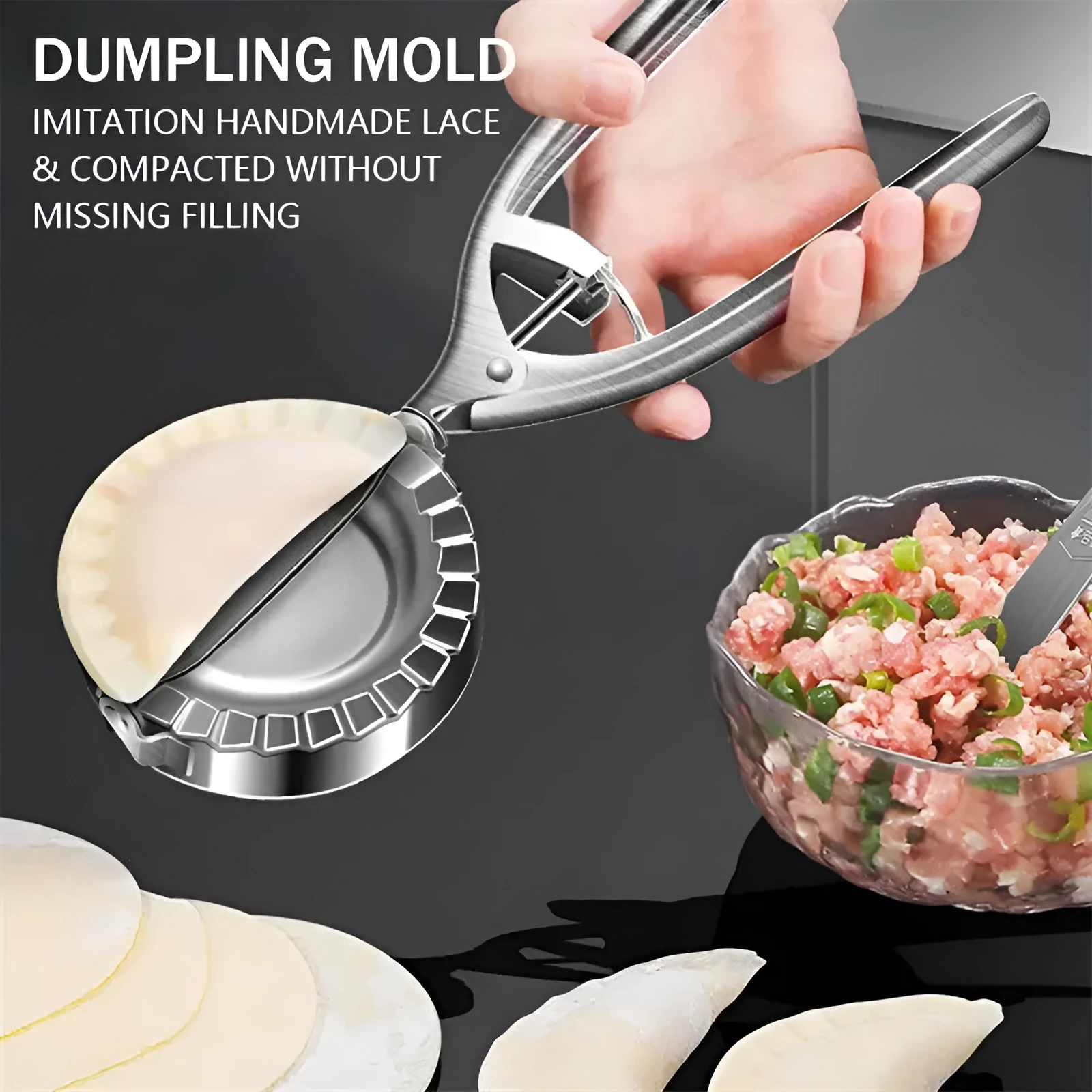
The value of this tool lies in its construction and intended function for home cooks.
The use of 304 stainless steel suggests a focus on longevity through material choice, as it is less prone to corrosion than some other metals. Maintenance involves standard cleaning and drying practices common to kitchen utensils.
This dumpling mould may be a suitable choice for those seeking a manual, non-electric tool to help create consistently shaped and sealed dumplings or pastries. Its stated versatility across different pastry types and the practical benefits of its stainless steel construction form its core proposition.