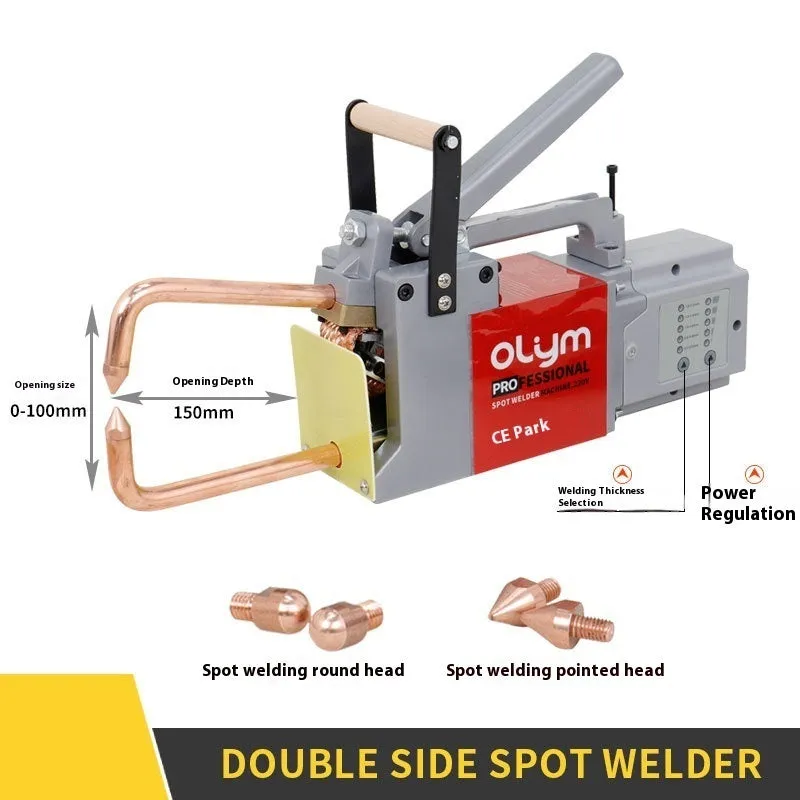
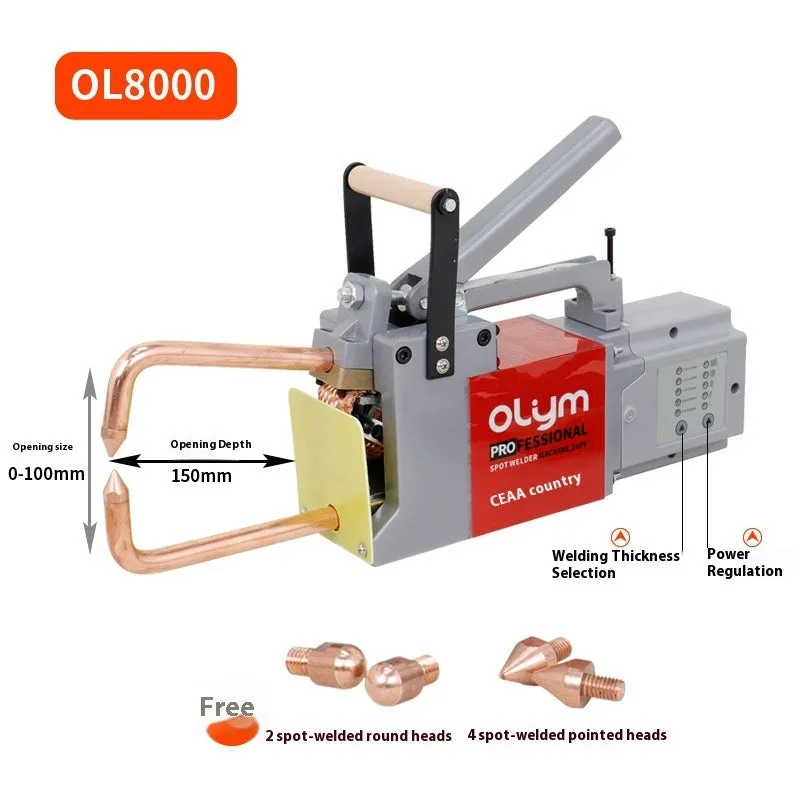
Double-sided Spot Welder Butt Welding Machine OL8000: Manual Pulse AC Control for 220V Input with Two Round and Four Pointed Welding Heads
£483.98
OL8000 Double-sided Spot Welder: Manual Pulse Control for Consistent Butt Welds on 220V AC
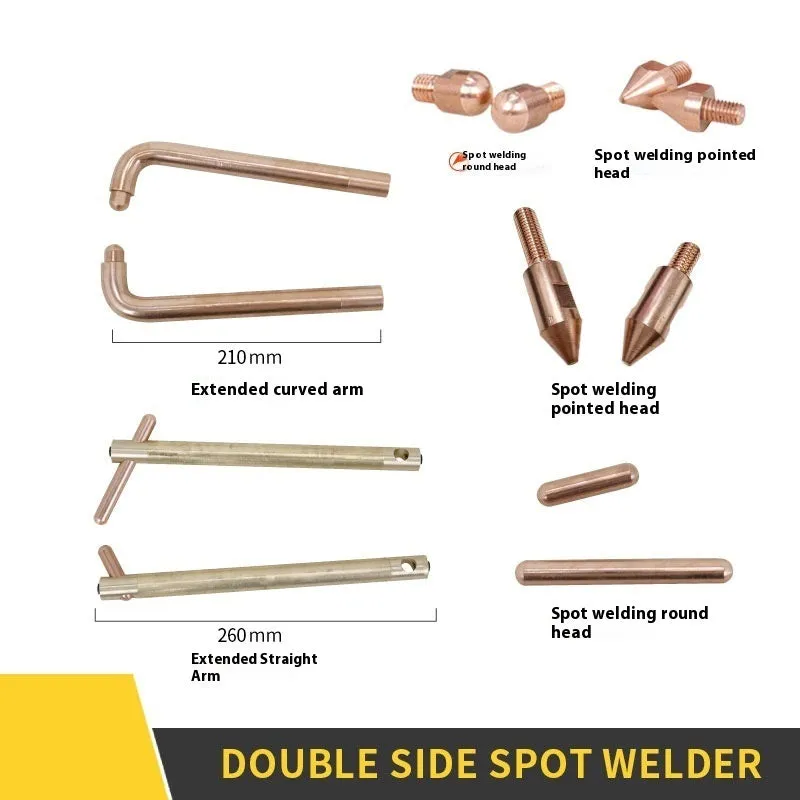
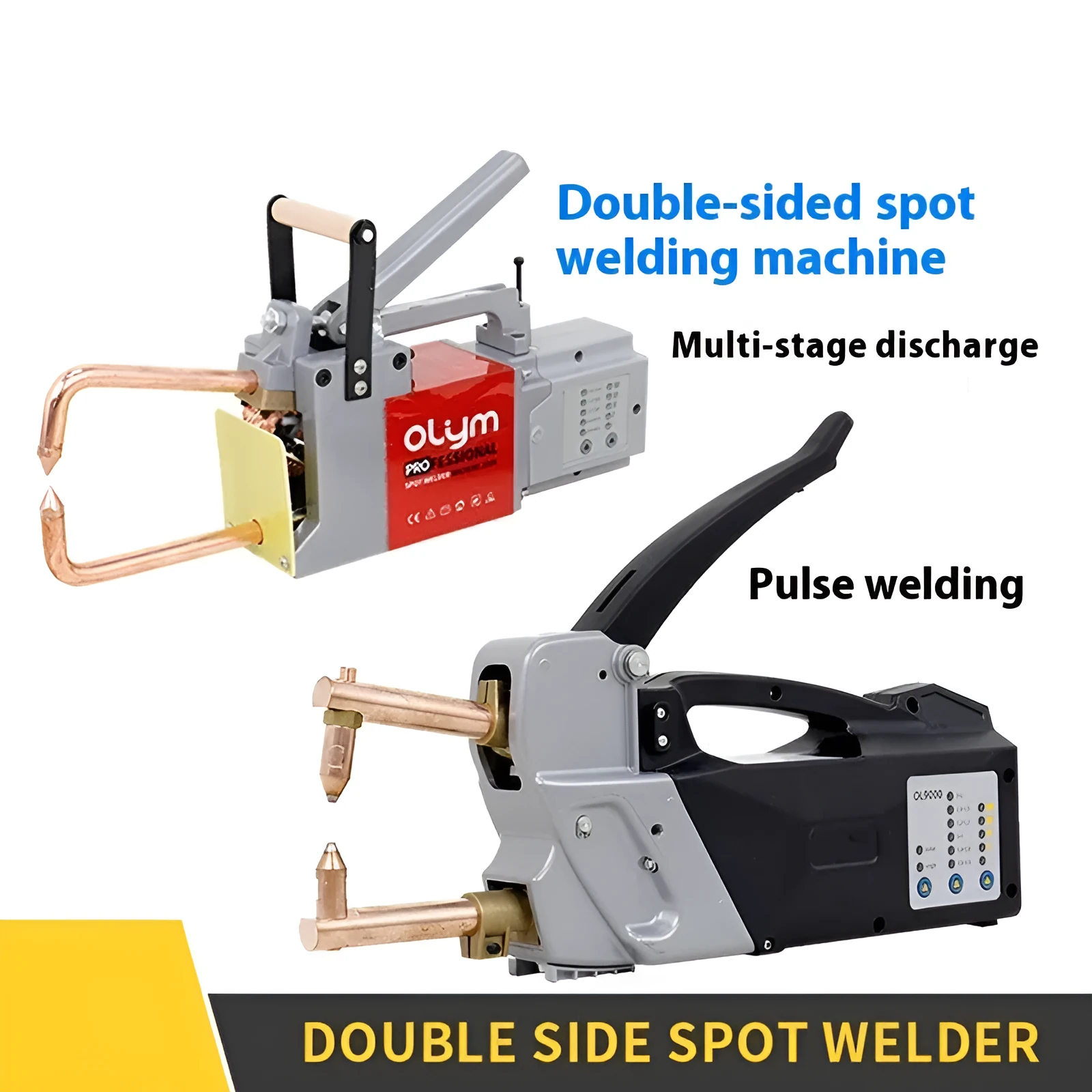
The OL8000 double-sided spot welder provides a solution for creating reliable butt welds on metal sheets and components, using a manual driver system that gives operators direct control over welding pressure. With pulse control mode managing current flow in timed intervals, this machine reduces the risk of material distortion that can occur with continuous welding currents. Operating on 220V AC input compatible with EU power specifications, the welder includes two round welding heads for general applications and four pointed heads for detailed work, offering adaptability across different welding tasks without requiring multiple machines.
Features and Technical Specifications
This section details the operational characteristics and included components of the OL8000 spot welder, explaining how each feature contributes to effective metal joining in workshop environments.
Manual Driver Operation
The manual driver type requires operator intervention to apply pressure during welding cycles, allowing adjustment based on material thickness and joint configuration. This hands-on approach provides tactile feedback during the welding process, enabling immediate response to material behaviour. Unlike automated systems, the manual operation suits small-batch production and repair work where each weld may require individual attention.
Pulse Control Technology
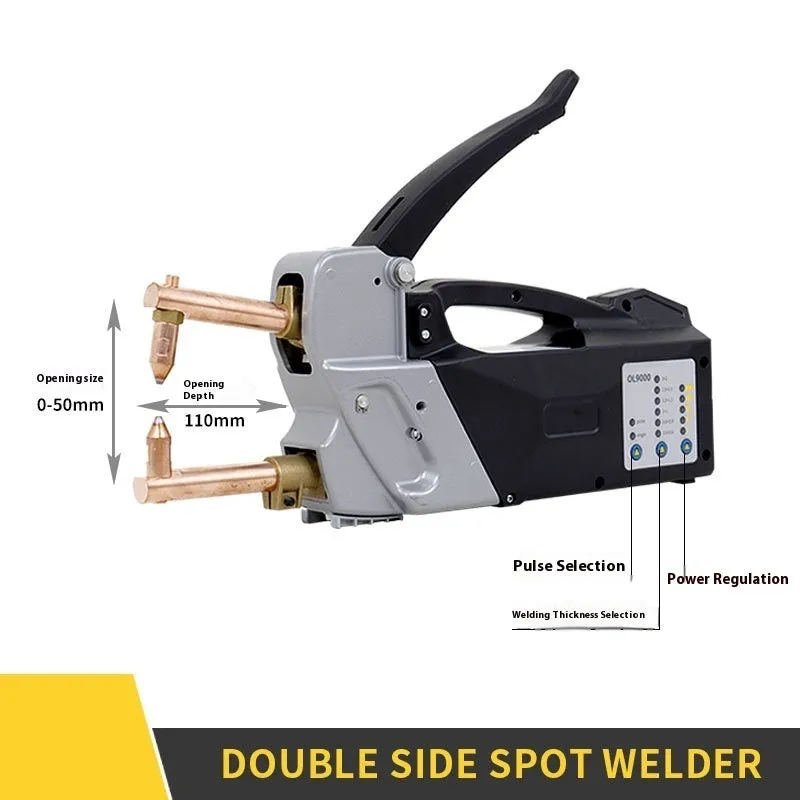
Pulse control mode regulates current delivery in precise intervals rather than continuous flow, managing heat input to the workpiece. This intermittent current application helps prevent burn-through on thin materials while ensuring sufficient penetration on thicker sections. The pulse timing can be adjusted according to material conductivity and thickness, with the AC current type providing consistent power delivery through standard 220V input.
Head Selection and Application
Practical Applications and Usage
Understanding how to apply the OL8000 spot welder in different scenarios helps maximise its utility in metal fabrication and repair work.
Workshop Fabrication Use
In workshop environments, this spot welder handles butt welding of sheet metal components up to medium thickness, where consistent joint strength is required without excessive heat distortion. The manual driver allows operators to compensate for material variations, while pulse control prevents overheating during extended welding sessions. The 220V AC operation integrates easily with standard workshop electrical systems without requiring specialised power conversion.
Repair and Maintenance Applications
For repair work on existing metal structures, the pointed welding heads access confined areas where larger equipment cannot reach. The manual operation provides control when working on delicate components, with pulse control preventing damage to surrounding materials. The tactile feedback from the manual driver helps identify proper weld penetration without visual inspection in hard-to-see locations.
Adaptability Across Materials
While specific material compatibility isn't detailed in the source, the combination of manual pressure control and pulse current delivery suggests adaptability to various conductive metals. The selection of round versus pointed heads allows matching contact area to material thickness, with pointed heads suitable for thinner gauges where concentrated energy prevents spreading heat to adjacent areas.
Operational Benefits and Considerations
The OL8000 spot welder offers specific advantages for users requiring controlled metal joining without automated systems.
Cost-Effective Metal Joining
Compared to fully automated welding systems, this manual spot welder provides a lower-cost entry point for businesses requiring butt welding capability. The inclusion of six welding heads reduces the need for additional accessories, while the 220V AC operation avoids specialised electrical installation costs. Maintenance focuses primarily on welding head replacement rather than complex electronic components.
Operator-Controlled Results
Practical Implementation
Implementing this spot welder involves selecting the appropriate head for each application, ensuring proper electrical connection to 220V supply, and developing operator technique for consistent results. The machine's simplicity—manual operation with pulse control—reduces training requirements compared to fully automated systems, while still providing controlled welding capability for butt joints in various configurations.