Stay Inspired
Subscribe for exclusive tips and storage ideas to elevate your kitchen.


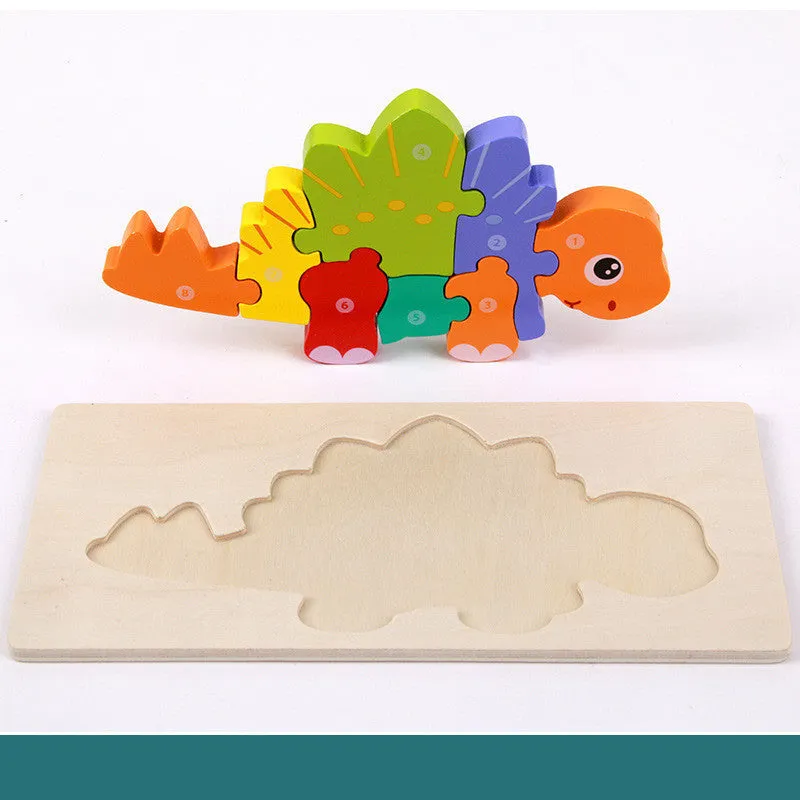
This educational toy set combines wooden construction with prehistoric dinosaur themes to create engaging three-dimensional puzzles for young children. Designed specifically for children between 4 and 6 years old, the set introduces spatial reasoning and problem-solving through hands-on assembly of six different dinosaur models. Unlike conventional flat puzzles, these three-dimensional building projects require considering multiple planes and angles during construction. The Montessori-inspired approach emphasises self-directed learning through manipulation of physical materials, allowing children to develop fine motor skills while exploring prehistoric creatures. With designs including both well-known dinosaurs like Tyrannosaurus Rex and Triceratops alongside less familiar species such as Paranodosaurus, the set provides varied building challenges that maintain engagement across multiple play sessions.

The wooden dinosaur puzzle set focuses on three-dimensional assembly rather than conventional puzzle formats, requiring spatial thinking across multiple planes during construction. Each dinosaur design presents unique structural challenges that correspond to the creature's distinctive physical characteristics, from the plate-backed Stegosaurus to the horned Triceratops.
Manufactured from solid wood material, the building blocks provide a tactile construction experience that differs from plastic alternatives. The wooden components offer natural weight and texture that enhances sensory engagement during assembly. The material choice supports the Montessori educational philosophy emphasising natural materials and hands-on manipulation for childhood development. While specific wood type or treatment details are not provided, the material selection indicates focus on durability and tactile quality suitable for repeated assembly and disassembly by young children.
The age recommendation of 4-6 years indicates components are sized appropriately for developing fine motor skills, with pieces likely large enough to handle safely while small enough to challenge coordination. As a 3D puzzle rather than general building blocks, the set likely includes specially shaped pieces designed to interlock in specific configurations to create recognisable dinosaur forms. The absence of detailed measurements suggests the set prioritises relative proportions between dinosaur designs rather than exact scale reproduction, allowing children to compare different prehistoric creatures through completed models.

This educational toy set serves multiple developmental purposes while providing engaging prehistoric-themed play. The dinosaur designs create natural opportunities for learning about prehistoric creatures alongside spatial reasoning development through three-dimensional construction challenges.
While primarily designed for home educational play, the set could supplement early years educational settings implementing Montessori or hands-on learning approaches. The prehistoric theme aligns with natural history topics commonly introduced in early childhood education, providing concrete models for discussing dinosaur characteristics and habitats. The six different designs allow for group activities where children work on different dinosaurs before comparing finished constructions, fostering collaborative discussion about anatomical differences between species. The wooden construction makes completed models suitable for display in classroom environments or educational exhibits about prehistoric life.
At home, the set provides screen-free construction play that develops problem-solving skills through three-dimensional thinking. The dinosaur theme particularly appeals to children interested in prehistoric creatures, making educational development feel like imaginative play rather than formal learning. The six different designs offer extended play value as children progress through the various dinosaur constructions, with each model presenting unique structural challenges. Completed dinosaurs can serve as decorative elements in children's rooms or play areas, with the wooden material providing visual warmth compared to plastic alternatives. The set encourages revisiting and reassembling, allowing children to refine construction techniques across multiple attempts.

The wooden dinosaur puzzle set combines educational development with engaging prehistoric themes through hands-on three-dimensional construction. Unlike electronic alternatives, the physical manipulation required develops fine motor coordination alongside spatial reasoning skills essential for mathematical and scientific thinking.
The wooden construction material typically withstands repeated assembly and disassembly without significant wear, extending usable lifespan beyond more fragile materials. Without electronic components or batteries, the set requires no power sources or technical maintenance, remaining playable regardless of battery availability or technical issues. The absence of detailed cleaning instructions in the source information suggests straightforward maintenance through occasional wiping, with wood's natural properties resisting staining better than some porous materials. The modular nature allows storage in compact form when not in use, with pieces designed to fit together efficiently for space-saving keeping between play sessions.
This set distinguishes itself through specific focus on three-dimensional dinosaur puzzles rather than general building blocks, providing structured construction challenges with recognisable outcomes. The six different dinosaur designs offer substantial variety within a cohesive prehistoric theme, maintaining engagement across multiple play sessions. The age-specific recommendation (4-6 years) indicates design consideration for developmental appropriateness, with challenges calibrated to emerging spatial reasoning abilities. The Montessori-inspired approach prioritises hands-on manipulation and self-directed problem-solving rather than following rigid templates, fostering independent thinking alongside construction skills. The wooden material provides tactile quality and durability advantages over plastic alternatives commonly found in similar educational toys.